
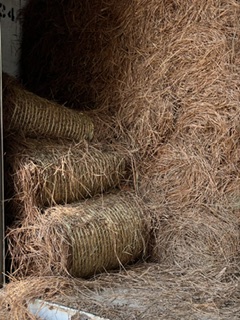
Description
Advantages of pine straw
- Moisture retention: Helps soil stay moist by reducing evaporation.
- Weed suppression: Creates a barrier that limits weed germination.
- Temperature moderation: Insulates plant roots from heat and cold.
- Erosion control: Interlocking needles stay in place better than some mulches on slopes.
- Natural appearance: Provides a clean, woodland look that complements many landscapes.
- Easy application: Lightweight and simple to spread.
Potential drawbacks
- Needs replenishment more often than some hardwood mulches because it decomposes relatively quickly.
- Can be displaced by strong winds before it settles.
- May require annual top-offs to maintain appearance and coverage.
How much pine straw do you need?
A typical round bale covers:
- About 100 square feet at a depth of 2–3 inches.
To estimate:
- Measure the area (length × width in feet).
- Divide total square footage by the coverage per bale.
For example, a 500-square-foot bed would typically require about 5 bales.
Installation tips
- Remove weeds and debris.
- Edge beds if desired.
- Spread pine straw evenly to a depth of 2–3 inches.
- Keep mulch a few inches away from tree trunks and plant stems.
- Water lightly after installation to help it settle.
Best plants for pine straw mulch
Pine straw works particularly well around:
- Azaleas
- Camellias
- Hydrangeas
- Gardenias
- Pine trees and other evergreens


Reviews
There are no reviews yet.